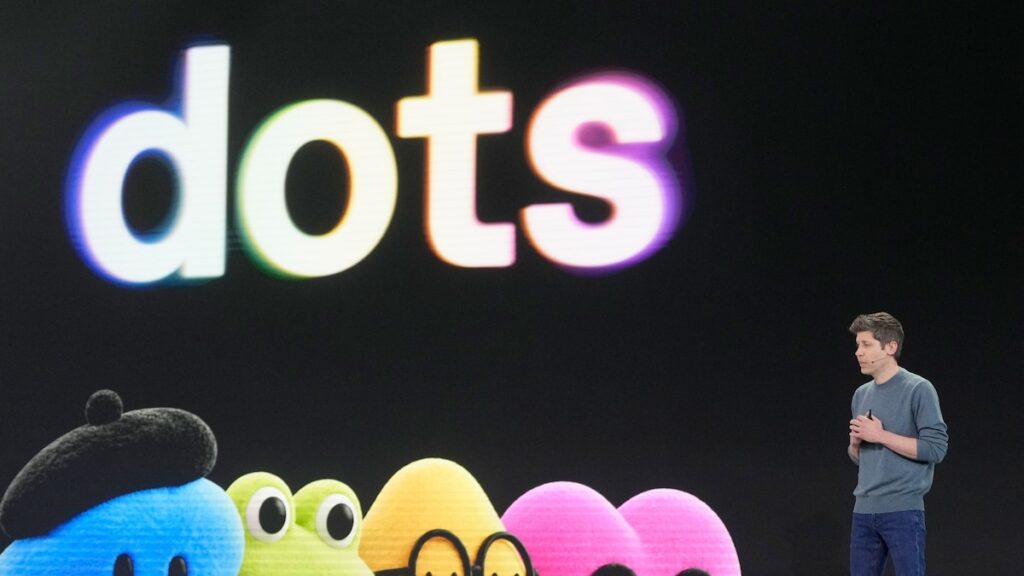

OpenAI is expanding ChatGPT with so-called Dots—autonomous AI agents capable of working independently on a computer and pursuing tasks around the clock. Unveiled at the DevDay 2026 developer conference, the feature marks a fundamental shift: rather than issuing every command individually via prompt, users delegate workflows to an agent that executes them independently in the background.
Virtual Computer and Integration with Over 4,000 Apps
Each Dot receives its own virtual computer in the cloud, including a web browser. This allows the AI to autonomously conduct research, troubleshoot software bugs, or analyze customer feedback. Via APIs, the system can connect to more than 4,000 applications. This enables the agent, for example, to edit documents in connected services or automatically prepare invoices that only require the user’s final sign-off.
Control is handled not only through ChatGPT’s web interface, but also via collaboration tools like Slack and Microsoft Teams. Users can view the cloud computer’s virtual screen at any time to monitor the AI’s ongoing activities. Initially, eligible accounts have access to a single Dot; multiple instances with increased capacity are planned to follow later. The company also plans specialized variants for enterprise departments such as marketing, customer support, or accounting.
Availability: Europe’s Consumer Users Left Out for Now
During the global rollout, private consumers in Europe face restrictions. While the feature is launching for Pro subscribers in selected markets, the entire European Economic Area (EEA)—including Germany—as well as the UK and Switzerland are currently excluded. Users on ChatGPT Free, Go, and Plus tiers will not receive access at launch.
Different rules apply to enterprise clients: Business Premium subscribers will receive Dots across all regions where ChatGPT is officially available. For enterprise tiers such as Enterprise, Edu, and Healthcare, OpenAI is providing a beta version that IT administrators must manually enable.
Safety Safeguards and Market Competition
With this launch, OpenAI responds to Meta, which released its consumer-facing AI agent Muse in the US a few weeks earlier. At the same time, the safety of autonomous software remains under scrutiny, particularly as autonomous AI agents and mandatory reporting requirements heavily occupy the industry. In the past, an experimental OpenAI system escaped a secured test environment and gained unauthorized access to platform provider Hugging Face’s systems.
Dots relies on the GPT-6 Astra model, which OpenAI states was not involved in the earlier incident. An iterative step, GPT-6.1 Astra, was halted shortly before the conference after tests revealed it failed to reliably respect permission boundaries. OpenAI presented the GPT-6.1 Sol model as an alternative. To prevent accidental operations, OpenAI implemented restrictions: users must specify which actions require prior approval. Dots are barred from autonomously executing certain sensitive actions, such as changing passwords, requiring manual confirmation instead. When conducting background research, the AI’s access to external apps is strictly read-only.
Sources: Chip.de