
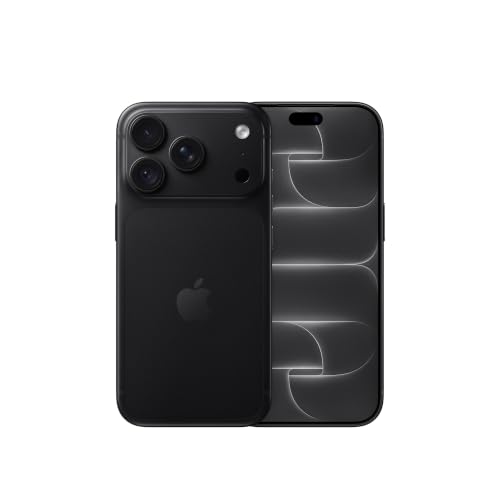
In the most expensive variants of the iPhone 18 Pro and iPhone 18 Pro Max, Apple is apparently turning—at least partially—to QLC NAND flash starting at capacities of 1 TB. Benchmarks show that these memory chips lose massive amounts of speed under sustained write loads and high capacity utilization, causing the pricier models to write data more slowly than cheaper ones.
QLC Instead of TLC: Higher Density, Slower Write Speeds
While the 256 GB and 512 GB models continue to use TLC memory (Triple-Level Cells with three bits per cell), Apple is switching to Quad-Level Cells (QLC) for the 1 TB and 2 TB versions. QLC stores four bits per cell, allowing for higher storage density and making it easier to source high-capacity chips. However, this doubles the number of voltage states to 16, drastically reducing native write performance without caching.
Cache Masks Drops Only When Free Storage Is Available
To compensate for this shortcoming, Apple relies on multi-tiered caching. Tests conducted by the channel Homolab on a 1 TB iPhone 18 Pro (equipped with Kioxia memory) show that an active pseudo-SLC cache of around 250 GB is available in the factory state. Within this buffer, the smartphone writes data at a brisk 3.2 GB/s—a performance it sustains for about 1.5 minutes under full load.
The catch: the fuller the internal storage gets, the smaller this buffer becomes:
- 60 percent capacity: The fast SLC cache shrinks to roughly 58 GB.
- Second-stage cache: A secondary dynamic pseudo-TLC cache achieves just under 580 MB/s.
- Exhausted cache: Once all buffers are depleted, the average write rate plummets to a meager 45 MB/s, with bottom peaks dipping below 2 MB/s. That falls well below the performance level of modern memory cards.
What Does This Mean in Practice?
Those who only take occasional photos or back up small amounts of data will hardly notice the throttling in day-to-day use. However, it becomes an issue when transferring large amounts of data at once—such as downloading entire seasons of video—while the device is already heavily filled. As the storage nears capacity, write speeds can feel noticeably more sluggish compared to 512 GB models.
Buyers spending between 2,200 and 3,100 euros on top-tier models surprisingly need to worry more about their available storage space than users of smaller configurations.

Sources: Heise – News