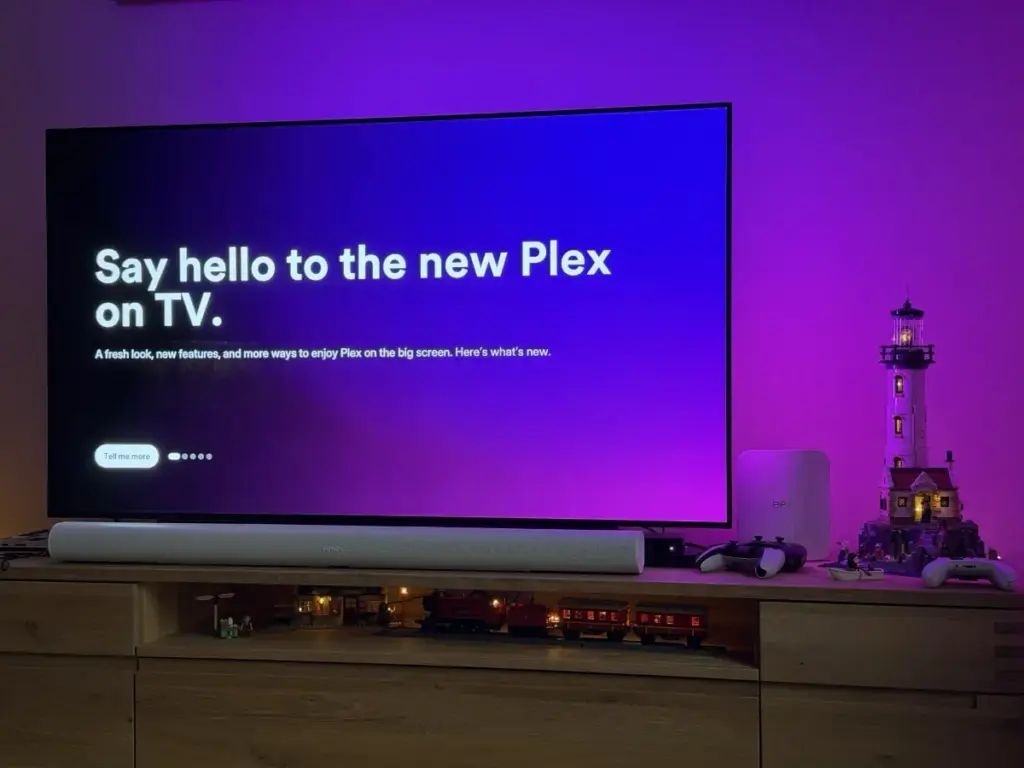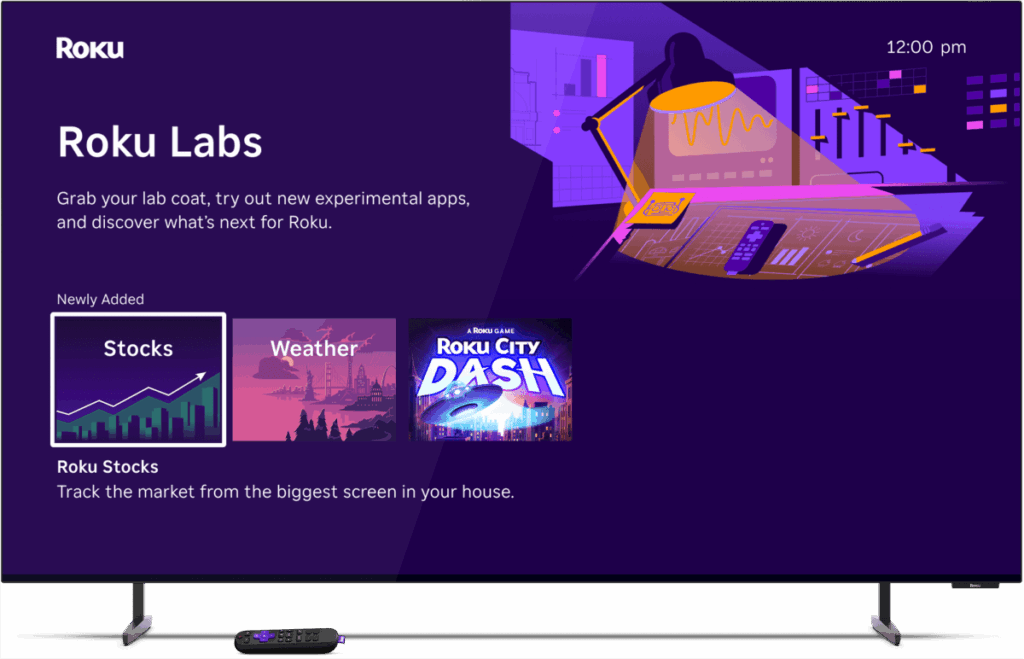

Roku has unveiled a major update for its TV operating system, Roku OS. The headline addition is “Roku Labs,” a testing platform that gives users access to experimental, first-party applications directly on their TV screens. The update is designed to strengthen Roku’s in-house software ecosystem and deliver a more personalized user experience.
Experimental Features via Roku Labs
The new Roku Labs section appears as a tile directly on the home screen of streaming devices and smart TVs. Through this hub, the company will offer apps that are still in development. At launch, the lineup includes apps for weather forecasts and stock quotes, as well as a game called “Roku Dash.” In the game, players steer a UFO through “Roku City”—the company’s signature screensaver featuring purple and pink neon aesthetics.
The test platform is initially rolling out exclusively to customers in the US. With this move, Roku is putting greater emphasis on proprietary applications to remain competitive against smart TV platforms from Google and Amazon, both of which are increasingly integrating AI assistants like Gemini and Alexa+.
Personalization, Voice Assistant, and Streaming Bundles
Alongside the launch of the testing hub, Roku is expanding its personalized home screen to additional countries. Devices in Mexico and Brazil will gain access to the tailored interface featuring customized recommendations and local content. In addition, the company’s voice assistant, Roku Voice, is gaining new capabilities and can now answer queries about current weather conditions.
On the streaming front, the company is introducing flexible subscription bundles. Users in the US and Mexico can combine multiple smaller streaming services, choosing from options such as AMC+, Fox ONE, Hallmark+, Howdy, and Starz. According to Roku, these curated bundles are cheaper than subscribing to the services individually.
Remote Control Source Code Goes Open Source
Another update caters to developers: Roku is open-sourcing the software behind its remote controls, dubbed Roku LT OS. Making the source code publicly available is intended to enable third-party programmers and tinkerers to build custom applications or compatible control devices on this foundation.
Sources: Techcrunch.com