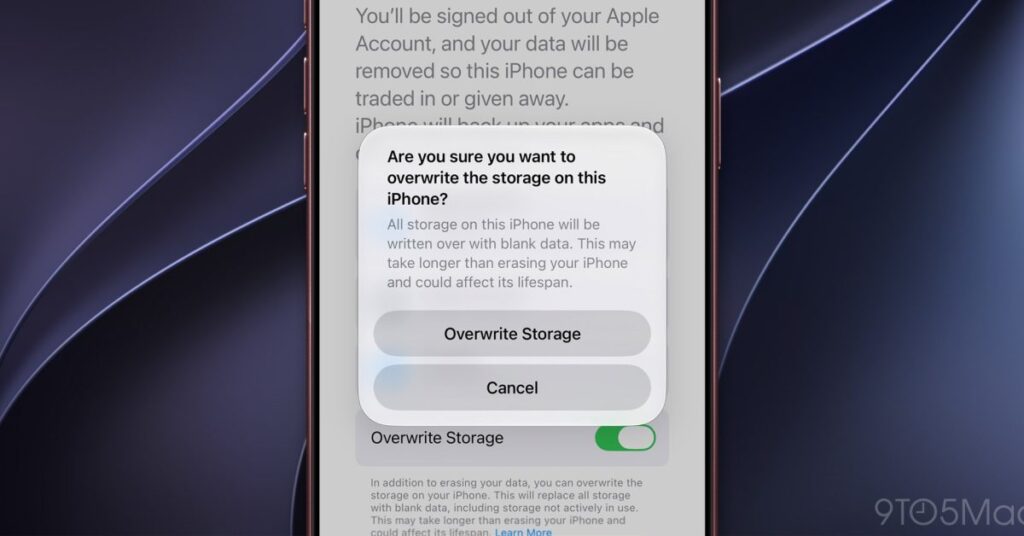

In the first developer beta of iOS 27.2, Apple is preparing an additional option for resetting devices. Moving forward, users will be able to completely overwrite internal flash storage with blank data during an erase, rather than merely removing the encryption key. As things stand, however, this change is aimed exclusively at devices sold in China.
Cryptographic erase versus physical overwrite
Until now, Apple has relied on what is known as a cryptographic erase when resetting an iPhone: the encryption keys stored in flash memory are irrevocably destroyed within a dedicated storage area (effaceable storage). Without this key, the data physically remains on the storage chips, but can no longer be decrypted. This process typically takes only a few seconds.
The method discovered in iOS 27.2 goes a step further: the system overwrites the entire device storage, including currently unused blocks, with blank data. According to strings found in the system code, Apple warns that this process can take significantly longer than a standard erase and could impact the device’s lifespan.
Regulatory requirements behind the change
The driving factor behind this new feature is a new technical standard in China (GB 46864-2025), which takes effect on January 1, 2027. It mandates that manufacturers of smartphones and other electronic devices provide mechanisms for a more thorough erasure of stored data. For solid-state memory, the standard specifies overwriting user data areas with meaningless data as an approved method.
Findings within the operating system confirm that the feature is not limited to iPhones. Corresponding code references also exist for the iPad, HomePod, and Apple Vision Pro.
Impact on resale in other markets
For users outside of China, nothing changes for the time being. Anyone wishing to sell or hand down their smartphone elsewhere can continue to restore the device to factory settings using the standard procedure. Destroying the cryptographic key renders the data inaccessible and continues to offer reliable protection against unauthorized access.
Sources: 9to5mac