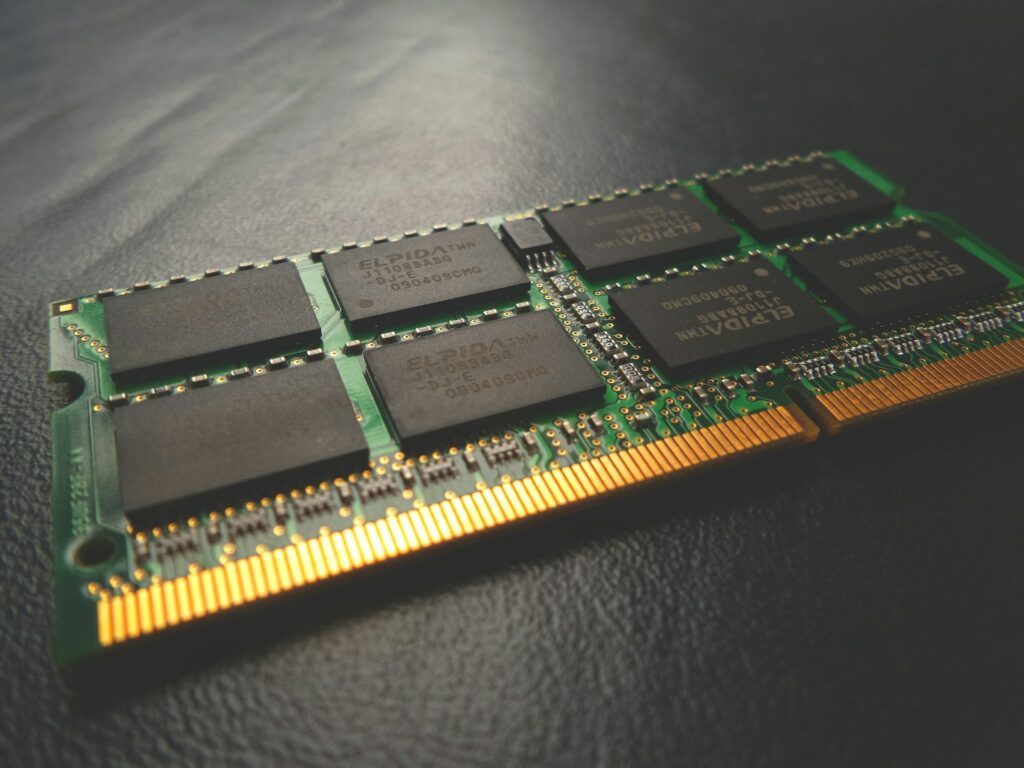

The global expansion of data centers for artificial intelligence is driving a severe shortage of memory chips. Because semiconductor manufacturers are prioritizing their production capacity for High-Bandwidth Memory (HBM)—ultra-fast memory for AI accelerators—standard DRAM and NAND flash are coming under intense pressure. The consequences are now having a tangible impact on smaller electronics manufacturers like Fairphone, Jolla, and Framework, as well as consumers in Germany.
Memory Costs Explode
Price trends across the memory market have deteriorated drastically over the past year. A standard 64 GB memory package that traded for around 200 US dollars twelve months ago now sits at roughly 1,100 US dollars—an increase of around 450 percent. Contract prices for DDR5 64GB RDIMM server memory surged to 1,500 US dollars, with spot market rates briefly spiking as high as 3,100 US dollars.
These price hikes hit budget and mid-range devices directly. Raymond van Eck, CEO of sustainable smartphone maker Fairphone, noted that memory components account for nearly 60 percent of raw bill of materials (BOM) costs for 400-dollar phones. Intel CEO Lip-Bu Tan remarked at the AI Infrastructure Summit in Santa Clara that RAM chips now make up 70 to 80 percent of the manufacturing costs of low-cost laptops and smartphones.
Manufacturers Respond with Redesigns and Counterfeit Testing
Beyond raw costs, allocation poses the biggest challenge: companies without guaranteed quotas from major memory manufacturers receive virtually no supply. Smaller brands are forced to get creative:
- Jolla is currently deploying two distinct motherboard layouts in parallel to pivot flexibly between available memory batches. The company also scrutinizes every shipment to filter out counterfeit or substandard chips.
- Framework is addressing the market turmoil with modular slots and relies on binding, non-cancelable preorders to secure components ahead of time.
- Experts at engineering service providers like Direct Insight are already advising hardware designers to trim capacities or temporarily fall back on legacy standards such as DDR3 for basic control tasks.
Price Hikes Across PCs and Consoles
The PC and gaming industry is also feeling the squeeze. During the reveal of the Steam Frame mobile device, Valve cited the procurement costs of 16 GB of LPDDR5X memory as the primary reason the unit launched at 1,049 euros—higher than originally budgeted. While high-end hardware targets the premium segment from the start, average prices for standard PCs are climbing across the board: in the second quarter of 2026, the average selling price in the US crossed the 1,000-dollar threshold for the first time.
Relief Unlikely for Years
Consumers will have to brace for higher hardware prices or scaled-back entry-level configurations for the foreseeable future. Industry leaders like Samsung and SK Hynix project the shortage will persist until at least 2027. SK Hynix CEO Kwak Noh-jung even estimates that demand could outstrip capacity well past 2030.
While manufacturers such as Micron, Samsung, and SK Hynix are pouring billions into new production fabs—including facilities in the US—it will take years before these plants achieve full-scale volume production. Consumers planning to purchase a new laptop or smartphone in the near term should consider whether their current device still suffices, or if modular hardware with upgradeable RAM makes for a smarter long-term investment.
Sources: Borncity.com