
TECH VNTH-T2_v2 in Home Assistant
Thermostats & TRV · Zigbee · Smart radiator valve
Zigbee device – see the note above on what ZHA needs for it.
Facts about this device
- Brand
- TECH
- Model
- VNTH-T2_v2
- Device type
- Thermostats & TRV
- Radio
- Zigbee
- Power
- Battery
- Reports itself as
- _TZE204_p1qrtljn
- Zigbee2MQTT
- Device page on zigbee2mqtt.io
How the device gets into Home Assistant
- official ZHA – with a Zigbee coordinator and the ZHA integration; for all its functions it needs a custom quirk, see above.
- add-on Zigbee2MQTT – Zigbee2MQTT runs as an add-on and passes the device on to Home Assistant over MQTT.
Known problems and fixes
Requests for ZHA support
- support requested The Maginon WT-1 Thermostat Radiator Valve (TS0601) is not supported in ZHA. Adding support would enable Home Assistant to control the thermostat and integrate it with automation.
ZHA quirks for this device
Custom quirk shared in an issue Recommended quirk
Shared in the issue tracker as a custom quirk – not reviewed by the ZHA maintainers.
Adds: Preset mode Child lock Open window detection Window open Holiday temperature Schedule Monday Schedule Tuesday Schedule Wednesday Schedule Thursday Schedule Friday +10
Source:
zha-device-handlers · issue #4565 · by @Nid01 · December 12, 2025
Signature: _TZE204_p1qrtljn / TS0601
Alternatives
The same job from other makers – devices of the same type and radio that work with Home Assistant too.
-
Aqara SRTS-A01 Thermostats & TRV · Zigbee · Smart radiator thermostat E1 Zigbee2MQTT ZHA quirk 1 open report Review · from 180.48 €
-
Zen Zen-01-W Thermostats & TRV · Zigbee · Thermostat Zigbee2MQTT ZHA quirk 1 open report Review
-
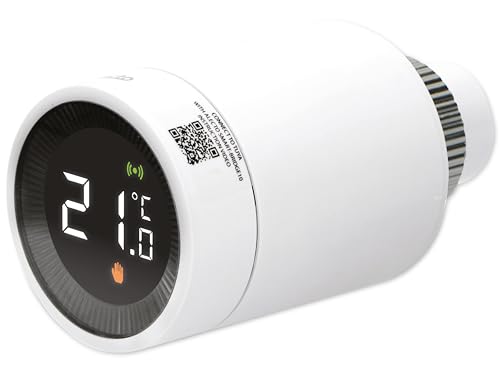 Alecto SMART-HEAT10
Thermostats & TRV · Zigbee · Radiator valve with thermostat
Zigbee2MQTT
ZHA quirk
Review
-
Brennenstuhl HT CZ 01 Thermostats & TRV · Zigbee · Radiator thermostat Zigbee2MQTT ZHA quirk Review
Sources: Zigbee2MQTT, ZHA quirks, Z-Wave JS, the Matter certification database, Shelly, ESPHome, Tasmota, Tuya Local and the issue trackers on GitHub. Reports are assigned to a device by the identifiers they contain; the sentences come from the integration pages, where a language model writes them from the titles.